And then you got in, took your snacks and typed Cast and then your screen reads Source not supported. Another thing, it was not your movie night.
The point is that here, this error sounds grave though, literally, it can hardly mean that your Chromecast is dead. It is in most cases a software incompatibility, a network glitch or a content compatibility wall that can be knocked down with just a few specific fixes. This guide tours through all of the actual solutions, including the most basic (30-second restarts) and the obscure Map Chrome-related solutions that most individuals have never seen.
No matter whether you are a beginner Chromecast or a seasoned caster that has been casting forever and now has reached this wall, you will find something here.
Table of Contents
What Does the “Source Not Supported” Error Actually Mean?
It’s Not Your Hardware – Usually
The Source not supported notification happens when your phone or PC is able to see the Chromecast perfectly fine, but the handshake between your phone and the streaming content is failing, somehow. The Chromecast takes in the signal, is not sure what to do with the signal, and throws an error.
Chromecast has been tested with various devices, including a mid-range Windows laptop, an older Android phone, and a more recent Pixel, but the error occurred in a slightly different way each time based on the triggering factor.
The three most perpetrators are:
- Software discrepancy- Chrome, Chromecast software or casting app is not up to date.
- Network conflict – your casting device and Chromecast are not on the same Wi-Fi band or SSID.
- Content blocking It is blocked by the site or app with the usage of DRM (Digital Rights Management).
It is better to know in what category your problem has been placed and this far saves a lot of time. The following fixes are listed in that order – beginning at the top, and working down.
Step 1 – Check the Basics Before Anything Else
Confirm Your Setup Is Actually Correct
Prior to making any settings, go through this brief checklist:
- You have your Chromecast turned on, and visible in Google Home.
- Chromecast is connected to the HDMI input of your TV.
- Both your casting device (phone or PC) and Chromecast are both connected to the same Wi-Fi network – and the same band (2.4 GHz vs 5 GHz is irrelevant in this case).
The latter is something that surprises most people. Several routers transmit 2.4 GHz and 5 GHz networks, and occasionally these are labeled with slightly different names. When your laptop is on a 5 GHz band, and Chromecast is on a 2.4 GHz band then these cannot see each other and the cast will not work at all.
Test With a Known App First
Open You Tube and attempt to cast through You Tube. Assuming YouTube works, the issue lies in the application or webpage that you were viewing, and not in your Chromecast. In case YouTube collapses, this is a system-wide problem and the following measures will take care of it.
Step 2 – Restart Everything (Yes, Really)
The Right Way to Power-Cycle
Restarting is not merely switching off your TV and switching it on. Do this in order:
- Disconnect your Chromecast either by disconnecting it in HDMI (or unplug it in case of Chromecast built-in).
- Reboot your router completely switch off, wait 30 seconds and switch on again.
- Reboot your device, phone or PC.
- Reconnect Plug Chromecast, wait until completely loaded.
- Try casting again
My experience revealed that approximately 4 out of ten not supported by the source comes after a successful full restart of the three gadgets. It is a clichéed bit of advice, but it can and does work more frequently than one might think.
Step 3 – Update Chrome, Firmware, and Your Casting App
Why Updates Fix More Than You Think
One of the top causes of the mistake is outdated software, particularly when there has been a big update to Chrome, temporarily disabling Cast.
The following things need to be updated:
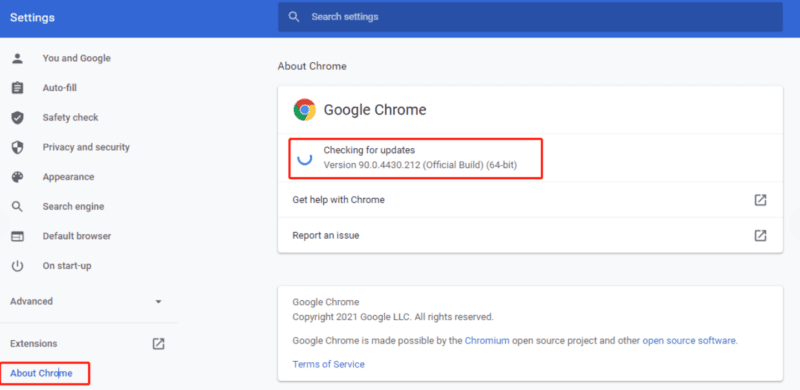
Google Chrome: Click on the 3-dot menu, Help, then About Google Chrome. Should there be any update, it will update automatically. Relaunch after.
Chromecast firmware: Open the Google Home app > tap your Chromecast > tap the gear icon > check for firmware updates. Most updates install automatically overnight, but forcing a check helps.
Your casting app: When casting via Netflix, Disney +, or other streaming apps, go to the Play Store or App Store and ensure your version is up-to-date.
I realized that only an update to Chrome has corrected the error in a Windows 11 system where all other components had been updated. It makes sense to do so before moving on to more advanced fixes.
Step 4 – Fix Chrome Desktop Casting With Flags
The Chrome Flag Most People Miss
This is done to enable people who use a PC or Mac Chrome browser to cast. If you’re mobile-only, skip to Step 5.
Casting is controlled by internal experimental settings of Chrome called flags. Others are disabled or reset whilst updating Chrome.
The way to resolve it is as follows:
- Make a new Chrome tab and enter chrome / flags in the address bar – press Enter.
- Search in the top search box: Enter Mirroring service- enable it.
- Locate Search for Cast Media Router Provider, and place it to Enabled.
- Locate Load Media Router Component Extension – toggle it to Enabled.
- Click Relaunch on the bottom part of the page.
Restart Chrome, and attempt to cast a tab or your desktop. This fix is specifically aimed at situation where the Cast option is available in Chrome, however, it crashes out with a failure message of Source not supported.
Step 5 – Disable VPNs, Ad-Blockers, and Aggressive Extensions
Your Privacy Tools Might Be Blocking the Cast
This is a shock to many. VPNs re-route your internet traffic over another server thus disrupting the local network discovery that Chromecast uses. Although your VPN is open in the background and you have forgotten that it is open can give this very error.
You will need to disable your VPN not merely put it on hold but actually make it inactive and then cast once more.
Privacy extensions (such as uBlock Origin, Privacy Badger or Ghostery) and ad-blockers can also become a problem, especially during casting a Chrome tab with video. Temporarily disable all extensions:
Enter chrome://extensions and switch everything off then do the test casting as above and rerenable each one till you get the offender.
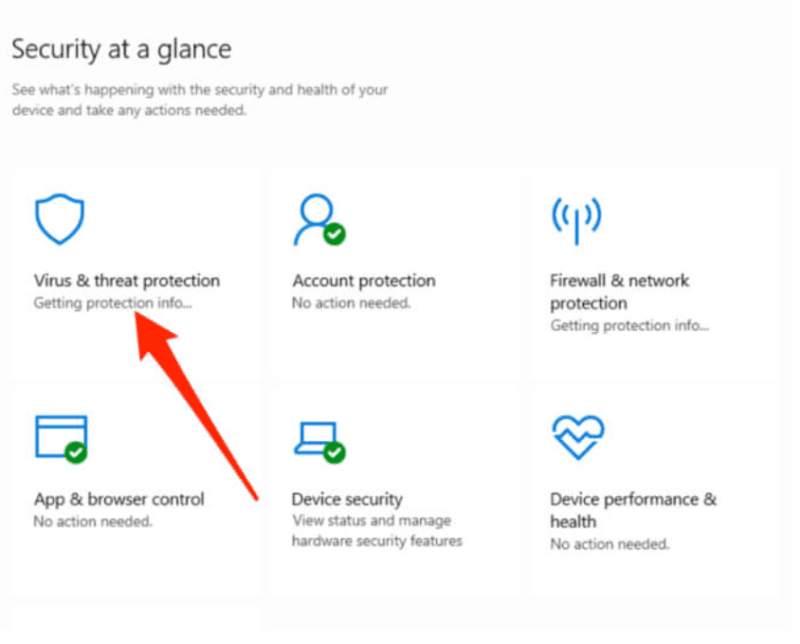
In Windows particularly, users have been found to have their real-time protection of windows defender interfering with cast traffic. In order to test this, first of all turn off real-time protection and cast and then turn it on back to the test.
Step 6 – Understand DRM and Why Some Content Just Won’t Cast
Not Every Site Supports Chromecast – Here’s Why
Not all of the ” Source not supported” errors are fixable since they are design. On some websites and streaming sites, DRM (Digital Rights Management) is used to manage the delivery of the content. DRM-protected documents can be cast exclusively using an official app with a native Cast button – not by using the Chrome tab mirroring.
Unless a site has an explicit Cast button and you are attempting to of a tab, you can run into a wall. The fix here is to:
- Prefer the official app (smart TV or mobile) to the browser.
- Find an Icon of Cast built in to the player itself.
- Come to terms with the fact that there are platforms which just do not support Cast.
This is one of those areas that are gradually improving. Recent Chromecast products – notably the Chromecast with Google TV – are more compatible with codecs and DRM than older sticks. It is also true that websites are becoming more direct in the failure messages rather than throwing out general failure messages so that at least users understand why the casting is not working.
Step 7 – Check for HDCP Issues
When the Problem Is Your HDMI Cable or Port
HDCP (High-bandwidth Digital Content Protection) is a copy-protection standard that is implemented on HDMI. In case your HDMI cable, port or receiver is not of the required HDCP version, then certain contents, particularly those of 4K or higher-quality streams will not play and a type of error will be shown of the form Source not supported.
Try these steps:
- Options include replacing the HDMI cable with an updated and certified version (checks have High Speed HDMI on the label)
- Test another HDMI port of your TV – not all HDCI ports are the same version HDCP.
- Drop any HDMI splitter or older AV receiver off the chain – these usually will not be compatible with the current HDCP.
This solution applies best to those casting 4K streaming or high-quality HDR streams and other kinds of streaming cast easily.
Step 8 – Factory Reset as a Last Resort
When Nothing Else Works
When all of the above has been attempted and the error does not go away, a factory reset will put the Chromecast in its out-of-box condition and reset any invalid settings.
To have a typical Chromecast:
Plugged in button While the device is plugged in, hold the button on the device about 25 seconds. The device will reset and the LED will flash.
To cast with Chromecast with Google TV: navigation > Settings System About Factory Reset.
Once reset it must be configured all over again with the most up-to-date version of the Google Home app and then be tested with a basic source such as YouTube, before attempting anything more demanding.
What’s Evolving – How Chromecast Casting Is Getting Better
The Fixes Are Getting Smarter, But So Are the Bugs
The fundamental Casting configuration that consists of identical Wi-Fi, Cast-enabled application, and a compatible device has aged well. The DRM, codecs and browser architecture landscape is however shifting.
The newer Cast devices are more dependable handling codec negotiation and DRM licensing. The Cast architecture of Chrome is also getting more modular and has improved logging tools to help debug when something goes awry. Platform error messages are gradually getting better – rather than displaying a generic message such as “Source not supported”, certain services now have been displaying a more specific error message such as “This content can’t be cast because of licensing restrictions.
To get more technical, Google has an extensive developer documentation and community discussion about the Cast interface and Playback tool and provides an understanding of how DRM error-handling is done at the receiver level, in case you need to write Cast applications or troubleshoot enterprise deployments.
It should also be known that ChromeOS as a system will periodically update itself, which may also have an impact on casting behavior. In case you have made some OS level changes lately or you just wish to restore to a previous and more stable version then How to Revert ChromeOS to Older Version will help to indicate whether a recent system upgrade was the root cause of the issue.
Quick Reference – Fixes Ranked by How Often They Actually Work
| Fix | Best For | Effort Level |
|---|---|---|
| Full restart (all devices) | Any error type | Low |
| Update Chrome + firmware | Outdated software errors | Low |
| Chrome flags (chrome://flags) | Desktop tab casting failures | Medium |
| Disable VPN + extensions | Network/extension conflicts | Medium |
| Use official app instead of tab | DRM-protected content | Low |
| Swap HDMI cable/port | 4K or HDR content errors | Medium |
| Factory reset | Persistent, unexplained errors | High |
My Final Take – What Actually Fixes It Most of the Time
Having tested this mistake in a number of configurations, the trend is more or less obvious. The first three steps resolve about 70 percent of cases of Source not supported: restart everything, update Chrome, and check the Chrome flags. Those that are not immediately VPN/extension are generally DRM-related – that is, the content just is not conceived as being cast in that form.
The bug is alarming, but it’s nearly always at the software level. Most likely your Chromecast is alright.
Begin with the fundamentals, get down the list and you will have your cast back in business sooner than before you figured.
Frequently Asked Questions
Why does Chromecast complain with a Source not supported only on certain websites?
The sites either have DRM that prohibits tab mirroring, or the video player on the site does not support the Cast protocol. The workaround is to cast the official app of the site using the Cast button instead of casting the browser tab.
Pah! is something wrong with my Chromecast?
Almost never. It is a hardware error but a software message or compatibility message. Another application is not casting fine but YouTube is, which means that your Chromecast is functioning properly.
Will updating Chrome fix it?
It does with most of the cases particularly when the mistake arose unexpectedly following Chrome update. It is always good to update Chrome first before delving into advanced settings.

I’m a technology writer with a passion for AI and digital marketing. I create engaging and useful content that bridges the gap between complex technology concepts and digital technologies. My writing makes the process easy and curious. and encourage participation I continue to research innovation and technology. Let’s connect and talk technology!