
Last updated on October 2nd, 2026 at 03:22 am
Here’s a thought to ponder: you’ve probably liked a post, viewed a reel, or even seriously considered purchasing something all due to a person who hasn’t existed.
Not a fake account. Not a “filtered” selfie. A real person, a name, a personality, brand deals, and millions of followers in a fully computerized human.
Welcome to the realm of AI influencers. It’s not a far-out Sci-Fi premise, but rather what’s happening in your feed right now.
This debunks what AI influencers are, where they’re at right now, and what the future, if there is one, holds. Probably both.
Table of Contents
The Basic Idea (Which Is Less Simple Than It Sounds)
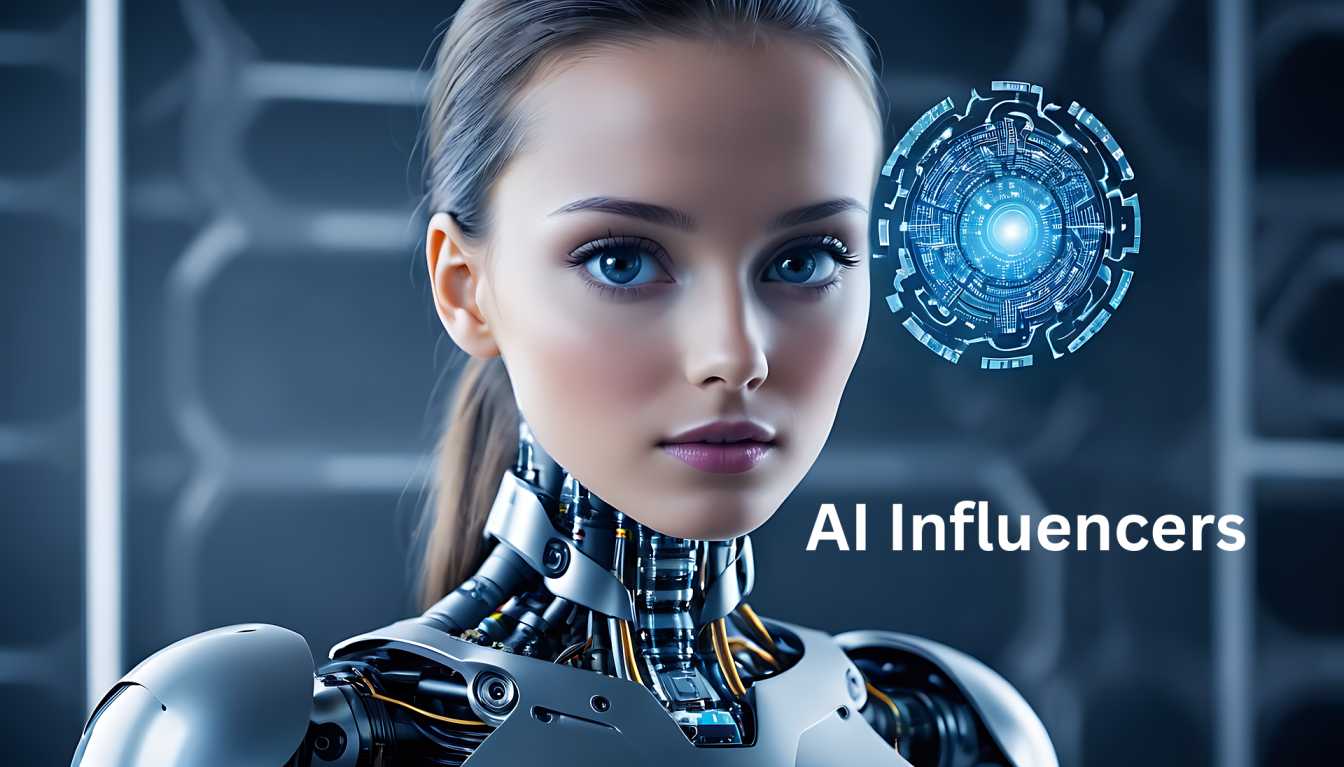
An AI influencer is a digital persona created through artificial Intelligence, CGI, and machine learning, designed to act like a real social media influencer. They post content. They have “opinions.” They collab with brands. Some even respond to DMs.
It’s the function keyword. They act as influencers. These do not exist without a server.
This isn’t a novelty; it’s the technology underpinning it. It’s not about cartoon logos from the 2010s. These characters use:
- Image models for generating consistent images (Stable Diffusion, Midjourney, etc.)
- NLP systems to create engaging storylines, responses, and captions that read like humans
- Allows users to control their audio and video with speech commands. Voice controls audio and visual content.
- Uses behavioral modeling to simulate engagement patterns.Behavioral modeling that simulates engagement patterns.
The result? The characters seem real enough to attract a devoted following, and at times, loyal fans make real purchases on their behalf.
What Are AI Influencers Actually Doing in 2025
These numbers are worth remembering. The AI influencer industry is expected to reach $1.5 billion in 2025. The influencer marketing sector is valued at about $32.55 billion, up from $24 billion a year ago. This represents a compound annual growth rate of more than 33% in the last ten years.
More telling: 92% of brands are either already deploying AI for influencer marketing – or they are open to it. 38% are running it right now.
This is no experiment. It’s a parallel marcomm system that is being developed without much fuss, without much hurley, without even any burley.
The Names You’ve Probably Scrolled Past
The leader is Lu do Magalu (7.8 million followers on Instagram), a Brazilian retailer founded in 2007. She still promotes products, interacts with customers, and hasn’t grown old in almost 20 years.
Lil Miquela (aka @lilmiquela) is by far the most culturally recognized, with approximately 2.4-2.7 million fans. Her collaborations with Prada and Calvin Klein have earned her a spot on Magazine’s ” Influential people on the Internet ” list, and her ability to cross over into fiction and identity debate for real realt suits her.
The world’s first digital supermodel, Shaderi Gram (Shudu), has over 238,000 followers on Instagram, has been in Vogue, and has worked with Balmain.
In India, though, Kyra (Indonesia’s Account @kyra.virtual) seems to reign supreme as a virtual model and traveler, with close to 255K followers; L’Oreal has featured her in campaigns, and Realme has documented her experiences on its platform as well.
Hmmmmmmm, what I saw in these clips was not the quality of the pictures; actually, visiting them is going to be a click of boring content. Outfit posts. Travel shots. Brand tags. Consultative material that anyone with 200,000 followers posts. That’s what it’s supposed to be used for.
Where the Tech Is Headed, And It’s Moving Fast
Realism Is No Longer the Hard Part
Virtual influencers were pretty automated and CGI at first. That’s gone now. Existing AI can render characters that have skin texture, light sensitivity, and genuine facial expressions that hold up even on video.
More interestingly, we’re now looking at emotional responsiveness – AI systems that sense — and respond to – user emotion in real-time. If somebody’s comment is frustrated, then the AI influencer’s response is consequently geared to that. That’s not branding. That’s behavioral engineering.
Voice Technology Changed Everything
AI influencers can produce video and voice content, which can be lip-synced using tools such as Sad-Talker and gTTS (Google Text-to-Speech). Talking characters, such as Aisha NEO, already use voice technology that sounds human in normal conversation.
This matters because we’re building this audience through video. If AI can have a real conversation on camera (this is still a prototype), the gap between the virtual and the real is hard to bridge or explain to a casual user who isn’t savvy about the subject.
They’re Running Their Own Campaigns Now
Most articles overlook this part! The power of AI agents goes way beyond typing — they can now write campaign briefs, check for compliance with brand guidelines, analyze and rank vendor performance, and even create content calendars, all while remaining unfingered by humans.
As a way to create content, it has become a side-hustle marketing operation.
When I tried some of these tools, I noticed one thing: the consistency is simply amazing. A human can change their visual style in six months. An AI influencer maintains precise colors, lighting patterns, and framing across hundreds of posts without variation. For brands, it’s a big deal.
My Take After Testing AI Influencer Content for a Week
(Check out our related blog post, I Spent a Week Following AI Influencers – what the comments told me about their daily engagement).
Whether you are commenting, reading the comments, or watching the stories, it taught me something I wouldn’t have learned from the statistics: The community around AI content creators acts like any other community around human content creators.
People defend them. People tag friends. People discuss their “authenticity” in the comments section without much thought. The emotional dynamics remain the same.
That’s a good indicator of where the focus will lie online. Often does not go with authenticity. It follows consistency, visual quality, and story – all things that AI can churn out without end.
The Challenges Nobody Talks About Honestly
The Transparency Problem
Many AI influencer accounts are created to look human. No disclosure. No bio with a “this is a computer-generated persona” in it. Followers assume they are following a real person.
This doesn’t seem trivial. It can affect trust, buying choices, and how people feel about the material. It is important to understand the human versus robotic perspective of watching a video review.
Beauty Standards With No Reality Anchor
Despite any human influencers’ filters and editing, people have bodies. AI influencers don’t. They are given proportions designed around an aesthetic ideal that doesn’t exist; they are darkened or lightened to look aesthetic, and their features are created to appeal to that aesthetic.
Research has linked this type of content to negative self-comparison, especially among younger viewers. The AI influencer space has not sorted this out. This increase in efficiency is what it has done.
Who’s Accountable When It Goes Wrong
But what if an AI influencer posts misinformation about health care, recommends a fake product, or creates offensive content? Right now, there is no clear answer. This space has an accountability deficit, and regulation largely hasn’t addressed it.
Enforcement is currently low, with some jurisdictions doing some work to create a framework as of 2025.
The Data Collection Question
AI influencers work partly by tracking user behavior data – what do you like, when, how long, and what do you purchase as a result? That data loop makes them more effective over time. It also means the audience becomes both a consumer and a product.
How Brands Are Actually Using This
The applications fall into three sections:
1. No price negotiation, no discounts for low-budget brands – AI influencers aren’t on vacation or in the money pit. For high-volume campaigns across multiple time zones, the economics are easy to calculate.
2. Brand-safe messaging – Human influencers also add unpredictability. AI influencers don’t. That consistency is what means something for brands in regulated industries (finance, pharma, legal).
3. Niche targeting – The AI influencer can be developed in a particular way, including a cultural style, language, and a reference frame, which it can connect with a specific group of people. Localized across multiple markets at once and truly local to them.
On its own, AI-assisted influencer selection delivers a 30% boost in earned media value over manual methods. If you don’t optimize with AI, statistics show about half of influencer marketing budgets are wasted on fake or weak audiences,
What I Find Genuinely Interesting About Tools Like GlamAI
There are numerous examples of how tools position themselves in the creator economy of AI, with GlamAI as an Influencer being one of them.
Tools such as GlamAI are unique from their counterparts, which are content generators based on generic AIs, because they are based on persona consistency: Keeping a character’s facial appearance, tone, and movements consistent across different content types.
In my experience, it’s the most difficult technical challenge in creating AI influencers. Once you have a good image, that’s one thing; SEC is an excellent site for working with photos! It’s not the 300 photos captured across different poses, lighting, and looks that look the same. It’s not the 300 selfies taken in a variety of poses, lights, and outfits that replicate.
Those tools help fix issues that cause inconsistency. The other half produces one big shot, and then it’s visual drift, easily recognizable.
Can You Actually Make Money With This? Here’s the Realistic Picture
If you want a clear idea of the true monetization stack beyond the fundamentals, check out How I Would Interestingly Earn Money With AI Influencers.
Realistic ways to monetize:
- Sponsored content — Brands pay flat rates to post content. Rates depend on follower count and engagement, similar to human creator rates.
- Affiliate marketing involves earning a commission on a link, typically a percentage ranging from 5% to 20% per sale. With AI influencers, you can market without exhausting yourself.
- Subscription models – Providing exclusive content on websites such as Patreon or Fanvue. A Reddit thread is the only one that has documented a creator earning more than $1,500 per day across several channels.
- Model Licensing – Renting your AI character to other brands for their ads and content without passing it to them.
- Virtual appearances – Hosting and/or appearing in branded webinars, live-streaming, and virtual appearances.
Only profitable businesses use it as a portfolio opportunity, not as a standalone income source. Return-on-investment calculations also factor in: Brands estimate their average return rate is about $6.50 for every dollar invested in influencer campaigns. Add AI optimization, and it goes up.
Two Resources Worth Bookmarking If You’re Getting Into This
Those who wish to dig deeper here: two outside resources that are more substantial than what you might find on a surface level:
- AI Influencer Guide
- Shopify’s statistics on how AI influencers contribute to monetization
Both are updated frequently and cite primary information, not recycled industry estimates.
Who Should Pay Attention to This (And Who Can Wait)
Pay attention now if you:
- Research and apply marketing strategies, brand management processes, and content strategies.Study and apply marketing, brand management, and content strategies.
- Building a creator business and seeking scalable channels? Building a creator business and looking for scalable channels?
- Create a tool, app, or a platform in the social space.
- Are you a digitalculture researcher/ journalist
If you have any of the following, you can wait:
- If your business is a solo-creator-centered brand, nurturing real community is still your edge here.
- Run a brand where credibility and trust are the key product.
The original take: AI influencers are not about to replace humans in the near future. They are parallel to each other. Those who understand both will have the best perspective on marketing’s current trajectory.
The Part Most Articles Leave Out
The following is a perspective that few articles convey about this issue:
AI influencers are driving the growing distinction between human and human-like influencers. This really is a cultural change. We often think of trust as knowing someone, following them on their real path, and seeing them fail and rise. We think of trust as knowing a person, their real path, seeing them fail, and seeing them rise. And much of the audience cannot discern the difference—and who cares anyway?
The second takeaway: monetization in the field of AI influencers goes beyond operating them; it lies in creating platforms and technologies that support their functions. The woes of consistency, platforms for verifying AI use in content creation, and analytics for measuring AI-generated engagement versus human engagement are still fledgling fields and ready for commercial solutions. The real leverage is hidden in that.
Final Thought
AI influencers are not a grind.AI influencers are no gimmick. They’re not either a right- or left-sided substitute for human sense or interconnectedness. They’re the newest piece in a marketing and content jungle that has become continually more complicated over the years.
It no longer has to be an option if you don’t know what they are, how they operate, or where the real risks lie. Not for the marketer, not for the creator, not for anyone who spends time building an audience or a business online.
They’re already in a great deal of the feed, and the material is already extremely full. It’s up to you whether you see what you have been told.

Passionate content writer with 4 years of experience specializing in entertainment, gadgets, gaming, and technology. I thrive on crafting engaging narratives that captivate audiences and drive results. With a keen eye for trends and a knack for storytelling, I bring fresh perspectives to every project. From reviews and features to SEO-optimized articles, I deliver high-quality content that resonates with diverse audiences.