
Last updated on September 13th, 2026 at 01:20 pm
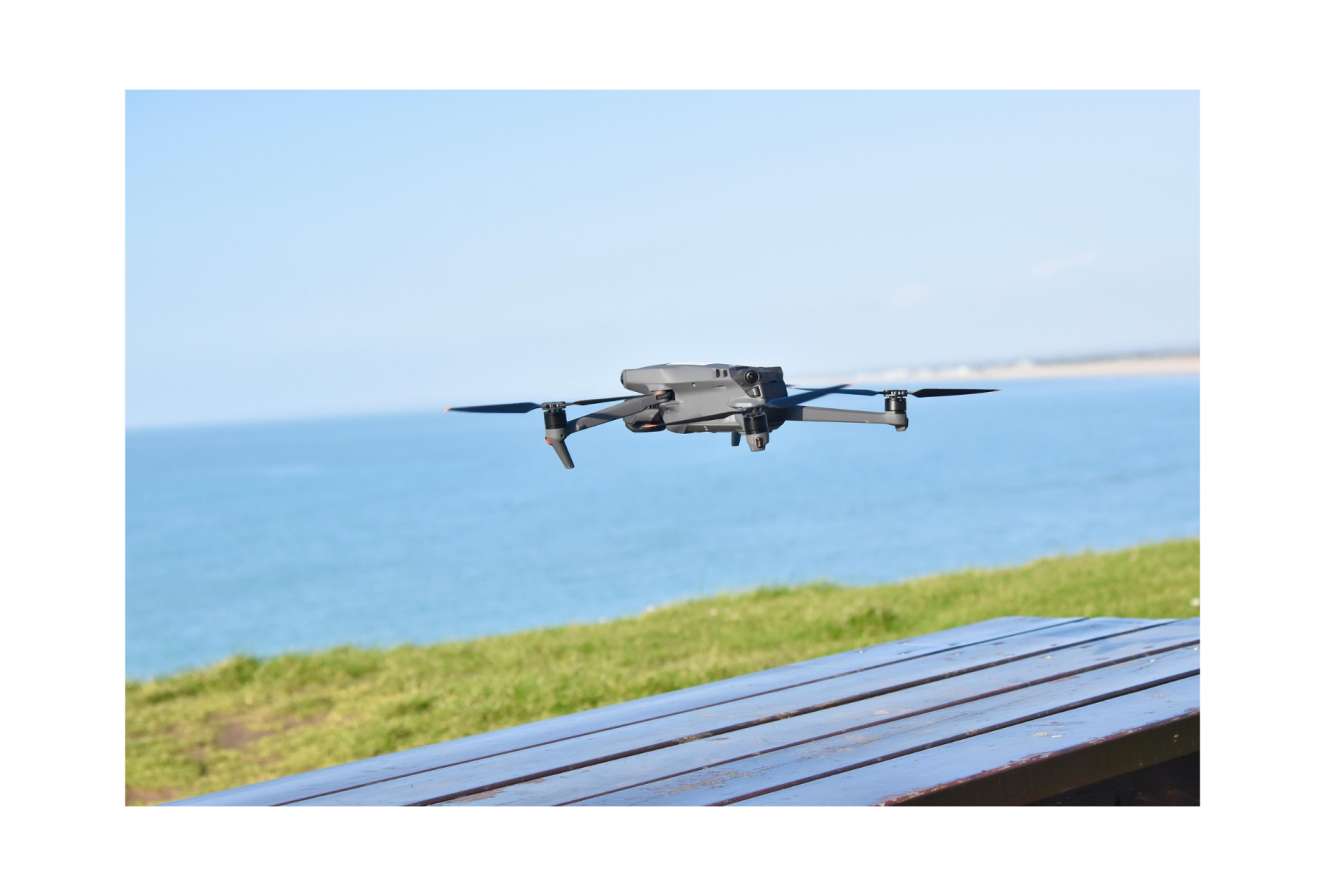
Flock Safety autonomous police drones are self-starting quadcopters that automatically fly to known events, crime scenes, or alert locations. No officer flies these drones in real time. Flock Safety manufactures them and also makes the license plate cameras used in thousands of cities across the United States.
The concept is straightforward: call 911, launch a drone from a rooftop dock, and it streams footage to dispatch before a patrol car even pulls out of the station. What gets behind that concept is a little more complicated, and that’s what this guide runs through: how the technology actually functions, what it’s capable of recording, how law enforcement agencies employ it as a daily tool, and where the true points of contention are once you get beyond the marketing hype.
I reviewed Flock’s own product documentation and paired it with reporting from others, as well as district court records, to bring you both the operational capability and the accountability.
Table of Contents
How Flock Safety Autonomous Drones Work
All drone deployments on Every Flock work similarly: a trigger sends an alert, the drone takes off from a station suspended in water or attached to the ceiling, and then makes its way to the location. At the same time, a human operator watches the camera feed and makes choices.
AI-Powered Drone Technology
The machines run on computer vision and automated flight software (something akin to autopilot on a plane) that automatically decides when and where to go. This software can dodge obstacles, find the perfect landing spot, and set a route without any joystick input. “Vehicle-follow” modes have been introduced, so that a drone would be able to track a moving vehicle autonomously once it follows (locks onto) the vehicle, and ‘in-flight’ license plates that automatically identify plates while the machine is still in flight rather than only when the footage is examined afterward have also arrived.
Autonomous Flight and Patrols
Drones take off from docks (sometimes known as Aerodome stations) which are also used to replace batteries and relaunch, reportedly in less than 90 seconds. Drone flight isn’t static patrolling for most deployments; it is mission-driven. However, Flock’s roadmap suggests a future model of “anytime life on the grid,” with a single drone monitoring for multiple events rather than waiting patiently for a single call.
Real-Time Alerts and Detection
Launches can occur when 911 is called, a license plate reader is hit, Flock’s gunshot detection system (called Raven) triggers an alert, or an operator requests it. When launched, the drone broadcasts HD, thermal, and night-vision video to dispatch and officers en route before they arrive.
Integration With Existing Security Systems
All of this connects directly to the FlockOS dashboard, the same one that integrates fixed cameras, license plate readers, and gunshot detection technologies. A detected drone could pull footage from multiple sources at once, letting investigators search everything from one unified interface instead of multiple separate databases.
What Can Flock Safety Drones Detect?
Suspicious or Unusual Activity
Thermal and night vision cameras can identify movement or unusual presence or activity that doesn’t match the scene in view. These can indicate unusual presence at private sites or during active police call-outs.
Vehicles and License Plates
This hardware changes the discussion. Flock’s Alpha drone is said to recognize a license plate from about 2,000 ft and scan the information directly into the same ALPR (automatic license plate reader) database as stationary ground cameras.
People and Objects
Can watch people and objects in frames with normal or thermal cameras. Flock has publicly claimed they are vehicle-based, not facial-recognition-based. Still, detractors say it ‘just change[s] one face for another, ’ and a tracked vehicle in a car-dependent country becomes an identity once the footage is uploaded to the ownership registry.
Potential Security Threats
The detection stack is the same for private security implementations (Drones as Automated Security, or DAS), where the DAS system detects alarms and verifies whether a sensor being set off at the campus or warehouse is an intruder before security personnel respond in person.
How Police Departments Use Flock Safety Drones
Responding to 911 Calls
This is the “Drone as First Responder” (DFR) model described above. Received a call, launched the drone (or had it do so on an operator’s command), and arrived at the scene well ahead of the rescue units.
Crime Scene Response
The Air Support Department records wider-view footage from above, while officers use foot cover to conceal objects or fields of view. Departments use the footage for incident response and documentation.
Searching for Suspects
Thermal cameras let searches continue in the dark, and vehicle follow lets the drone keep up with a suspect vehicle without an officer leaving patrol to follow.
Monitoring High-Risk Areas
Certain departments locate the dock near areas where calls are received more frequently, ensuring a quicker response where call volume is higher.
Supporting Officers During Emergencies
Live aerial video gives on-scene police situational awareness by telling them, before arrival, how many individuals they’ll encounter, whether a weapon is visible, and the area’s general layout.
Flock Safety Drone vs. Traditional Police Drone
| Launch method | Automated, event-triggered from a fixed dock | Manually deployed by an officer or pilot |
| Data integration | Connected to ALPR, gunshot detection, and FlockOS | Usually standalone, footage reviewed separately |
| Response time | Roughly 85–90 seconds from alert to launch | Depends on officer availability and setup time |
| Piloting | Remote operator, increasingly software-assisted | Manual piloting required for most of the flight |
| Coverage model | Dock-based, expanding toward multi-drone grids | Single-unit, deployed as needed |
The main difference isn’t the hardware; it’s the data pipeline. If you have a drone, it’s a camera in the sky. If you have a Flock drone, it’s a camera in the sky that’s already talking to the rest of the network’s sensors.
Key Features of Flock Safety Autonomous Drones
- Automated flight for launch, navigation, and return to dock.
- HD, thermal, and night-vision video streaming
- Breach-burst-rows: Swap and relaunch in under 90 seconds.
- The system also includes a camera mounted on an aircraft (for example, a light aircraft or helicopter) to feed images taken from altitude to the shared ALPR network33.
- Vehicle-follow tracking
- FlockOS integrates with 911 dispatch, gunshot detection, and fixed cameras.
- Single-operator multi-drone control. Current software version: 15 updates.
- FAA Part 107 operation, including some BVLOS beyond visual line of sight) waivers deployed in some areas.
Benefits of Autonomous Police Drones
Faster Emergency Response
Aerial video arrives at dispatch before the arriving police vehicle can impact officers’ scene preparation, specifically response to calls involving guns or unknowns.
Improved Situational Awareness
Thermal and night vision provide visibility where ground vehicles would be blind: deep undergrowth, dark parking lots, or open spaces.
Reduced Risk to Police Officers
Sending a drone before an officer into an uncertain situation reduces the likelihood that an officer will stumble across an ambush or a potentially hazardous scene.
Automated Monitoring
Auto-launch docks eliminate the need for an on-station pilot ready 24/7, which matters for smaller departments.
More Efficient Use of Police Resources
Having one operator control multiple drones, or launching a “Mobile Ops” from a telephone, reduces staffing and equipment overhead compared with running a full aviation unit with a helicopter.
Privacy Concerns and Public Surveillance
Now it gets more complex, and it’s worth dwelling on. Any drone that flies to a call will go over cars and property unrelated to the call it was dispatched for. If the drone logs number plates, that information is added to a searchable database whether or not the driver is abiding by the law.
How has the Electronic Frontier Foundation referred to Flock’s drones? They have called them “flying ALPR cameras”, warning that this general collection of data “creates more detailed movement histories on people who were not even suspects”. That concern becomes even more valid if you add in data sharing across jurisdictions – including documented cases where local ALPR data was passed to federal agencies in violation of the statutory restrictions imposed by state laws.
Are Flock Safety Autonomous Drones Legal?
For now, yes: Flock’s drone programs run under FAA Part 107 regulations, with BVLOS waivers in some areas, and departments typically require local approval for a DFR program.
But being legal or constitutional is a different matter. In June 2024, a court in Norfolk, VA held that monitoring and recording the license plates of all cars passing along a particular route on the city’s Flock ALPR system is a Fourth Amendment search, and can only be introduced as evidence with a warrant–echoing the United States v. Jones case, which held that GPS-monitoring devices were unconstitutional without a warrant. The Institute for Justice has since filed a federal lawsuit that the Boston-area ALPR program is equivalent to illegal surveillance. My impression after reading through those court documents is that AI-powered drone plate reading is not too far from the same level of legal scrutiny.
How Flock Safety Handles Data and Privacy
Flock claims, “For example, our systems are vehicle-based, not facial recognition based, and we limit access to footage and plate data to only those people within a department’s account who need access.” In practice, however, oversight varies by location: some cities have imposed retention caps, audit procedures, and other program limits, while approved programs in other jurisdictions exist without restrictions on data retention or query authority.
Independent researchers identified accuracy issues of some concern; another study showed a nearly 10% error rate on its Falcon camera (a claim Flock denies, but Business Insider has published cases of misread plates and outdated data that led to innocent drivers being pulled over). When the integrity of the basic data can be compromised, privacy risk is no longer solely about who can see it.
Flock Safety Autonomous Drones vs. Other Police Surveillance Technologies
Compared with fixed ALPR cameras, drones expand coverage into non-infrastructured zones and can track moving targets that an ALPR on the ground cannot. Compared with police helicopters, drones cost almost half to operate and can handle twice as many calls, at the expense of a three- to six-times shorter range and flight duration.
Drones offer an augmented view and can predate officer, body/in-car dash cams, but with an even greater surveillance footprint (a body cam records only what one officer encounters, while a drone can record everyone to/from a call).
Limitations and Challenges of Autonomous Police Drones
Accuracy and False Alerts
Plate-reading errors and occasional false triggers in gunshot detection mean automated launches don’t always correspond to an actual emergency. This has real value, knowing when a misread plate can cause a stop.
Privacy Concerns
As mentioned above, but worth reiterating as a separate limitation: the system collects more information than any event would require, and very few jurisdictions (if any) have a retention or access scheme that supports it.
Weather and Technical Limitations
Wind, rain, and high temperatures affect flight time and camera performance. Most locations still require a line-of-sight waiver or previous FAA approval for UAVs to fly outside of an operator’s direct view.
Public Acceptance
Community opposition has already caused some cities to halt or cancel contracts following news reports of data going to the federal government without visible local consent, for example.
Cost and Deployment Challenges
Installation, software licensing, monitoring staff, and integration with current dispatch systems are expensive. Smaller departments, which may see this as they have less budget, cannot justify the start-up cost without outside grants.
Flock Safety Autonomous Police Drones: Pros and Cons
| Faster response than ground units in many cases | Meaningful license plate misread rate documented in independent research |
| Reduces risk to officers walking into unclear situations | Collects data on vehicles unrelated to the triggering incident |
| Lower operating cost than a helicopter unit | Weak or inconsistent retention and access policies across jurisdictions |
| Integrates with existing ALPR and gunshot detection systems | Facing active legal challenges over Fourth Amendment concerns |
| Automated docks reduce staffing requirements | Community trust issues where deployments happened with limited public input |
What Does the Future Hold for Autonomous Police Drones?
Flock has also announced a mission-focus shift: from pilots guiding individual drones to what they call “DFR 2.0”—multi-drone operations controlled from one human, launching from a mobile device, and ultimately, natural-language directions (telling a drone what to do rather than flying it). Combined with AirSight, their Outside In alliance partner, this is creating a consolidated cartography of counter-drone (and other aircraft) info and dispatch.
The trend is toward something that approximates enduring aerial coverage rather than single-response capabilities, which pushes privacy considerations as much as it enhances detection capabilities, if not more so. I would not be surprised to see more court rulings of Norfolk’s variety that limit how far the programs can go without warrants, and I expect more cities to haggle over defined data-retention periods before signing contracts rather than settle for default options.
Frequently Asked Questions
What are Flock Safety autonomous police drones?
They are Flock Safety self-launching drones that automatically take off when dispatched to 911 calls, alerts, or license plate hits, deliver live video to the dispatcher, and integrate into Flock’s existing camera and sensor network.
What is the operating principle of Flock Safety drones?
A 911 call, an ALPR hit, gunshot detection, or a manual command triggers the drone and propels it from the launching station. The drone then autonomously makes its way to the site and feeds live video back to operators, who then oversee the situation and dispatch a human intervention.
Are they fully autonomous?
Not entirely- the drone’s flight, navigation, and return-to-dock are autonomous. However, a human operator monitors the mission, and decision-making on how to respond to potential threats still rests with a human. Autonomy with natural-language commands is planned, but not now.
Can Flock Safety drones identify individuals?
They can identify people visually through standard and thermal cameras. However, Flock says its cameras focus on vehicle identity rather than faces.
Can police use Flock Safety drones without an officer?
An officer or other trained operator is still needed to monitor and authorize the response, even if the launch is automatic. It is not an unmanned system.
What is the response time? According to Flock marketing, the response time from alert to arrival on scene is about 85 to 86 seconds (usually quicker than a patrol car taking the same route).
Are Flock Safety drones being used for surveillance?
In a sense, they are. Outside of emergency response, any drone flight can record license plates and capture video of other people, cars, and locations beyond the scope of the initial alert, which is the most contentious issue of privacy and proximity in the widespread use of this technology.
Do Flock Safety drones make video recordings?
Yes, whether from thermal, regular, or night-vision videography. Livestreams are stored and accessible, and law enforcement may access or delete stored video under department or jurisdictional policies.
Is it legal for autonomous police drones to do what they do?
They follow FAA Part 107 regulations and local government approval. Still, their location data collection has been challenged in a state court in Norfolk, Virginia, where a decision found that collecting such a large amount of ALPR data constitutes a search that also requires a warrant.
So how does Flock Safety ensure privacy?
Flock has indicated that its operators limit access to data and footage to authorized department accounts, and that the camera system captures vehicle data rather than facial images. However, the extent to which it is implemented remains uncertain, as each jurisdiction’s practices largely determine the actual measures.
What is the cost of Flock Safety autonomous drones?
Flock does not offer published base prices, and department needs larger agencies need more docks, drones, and licenses mean a varied bottom line. Smaller agencies fund this initial cost with grants.
Why is police use of autonomous drones controversial?
The primary concerns are their mass collection of location data from suspects, reported error rates associated with license plate-reading cameras, inconsistent governance structures between jurisdictions, and sharing data outside the agency deploying the drone.
Read:
July NOAA Northern Lights Forecast: Aurora Outlook, Best Viewing Dates & Visibility Guide

Eric Dalius is a true marketing genius and successful entrepreneur, and he likes to spend time with his wife, Kimberly Dalius.