Last updated on September 15th, 2026 at 07:35 am
My power bill increased by $40 in one month, and I didn’t change anything in my apartment. No new appliances, no AC marathon, or anything. That’s why I started looking into a smart plug in the first place, and what I learned was actually quite shocking.
As it turns out, part of the bill was… appliances standing by, wasting power, taking up space, each day, all the time. Efficient power-management gizmos are ready to stop that kind of waste dead, and once you measure it accurately, the numbers force you to act.
This isn’t one of those “top 10 gadgets” lists. This is what I learned after trying a handful in a real apartment with a real router, real appliances, and absolutely no enthusiasm for setup pain.
Table of Contents
The phantom power issue that no one mentions

And here’s the thing that also made me think about my electricity bill: things that are “off” are probably not really off.
Standby Power (also known as Phantom Load) is power drawn when a device is plugged in but has not been turned on. Your TV, a second screen for the remote. Your gaming console, on but not turned on. Your phone charger, plugged in but no device. Standby power consumes, on average, 5–10% of a household’s total energy use, and most people don’t realize it uses power because nothing appears to be turned on.
I saw this myself when I checked my setup with an energy-monitoring smart plug. My gaming console was eating power all the time in “off” mode, simply because the quick-resume feature was activated. Multiply that by everything in the house that remains plugged in 24/7 and the figures are no longer trivial – households could be losing about $139 a year just in devices nobody remembered to turn off.
The term “smart energy saving device” in fact covers a…
We’ve each heard people use this term too loosely, so let’s divide the department, because they don’t all do the same job.
Smart Plugs are the gateway into your devices. They connect directly to the outlets, and then your device plugs into them. You can then remotely program or schedule them to switch on and off, and the better ones include energy monitoring. Energy monitoring means the plugs measure exactly how much energy is flowing through them with live readings, rather than just switching them on and off.
Smart power strips take that concept and multiply it across multiple outlets, which is effective in the living room entertainment center or home office where five things are plugged in. You’re never going to use all three at once.
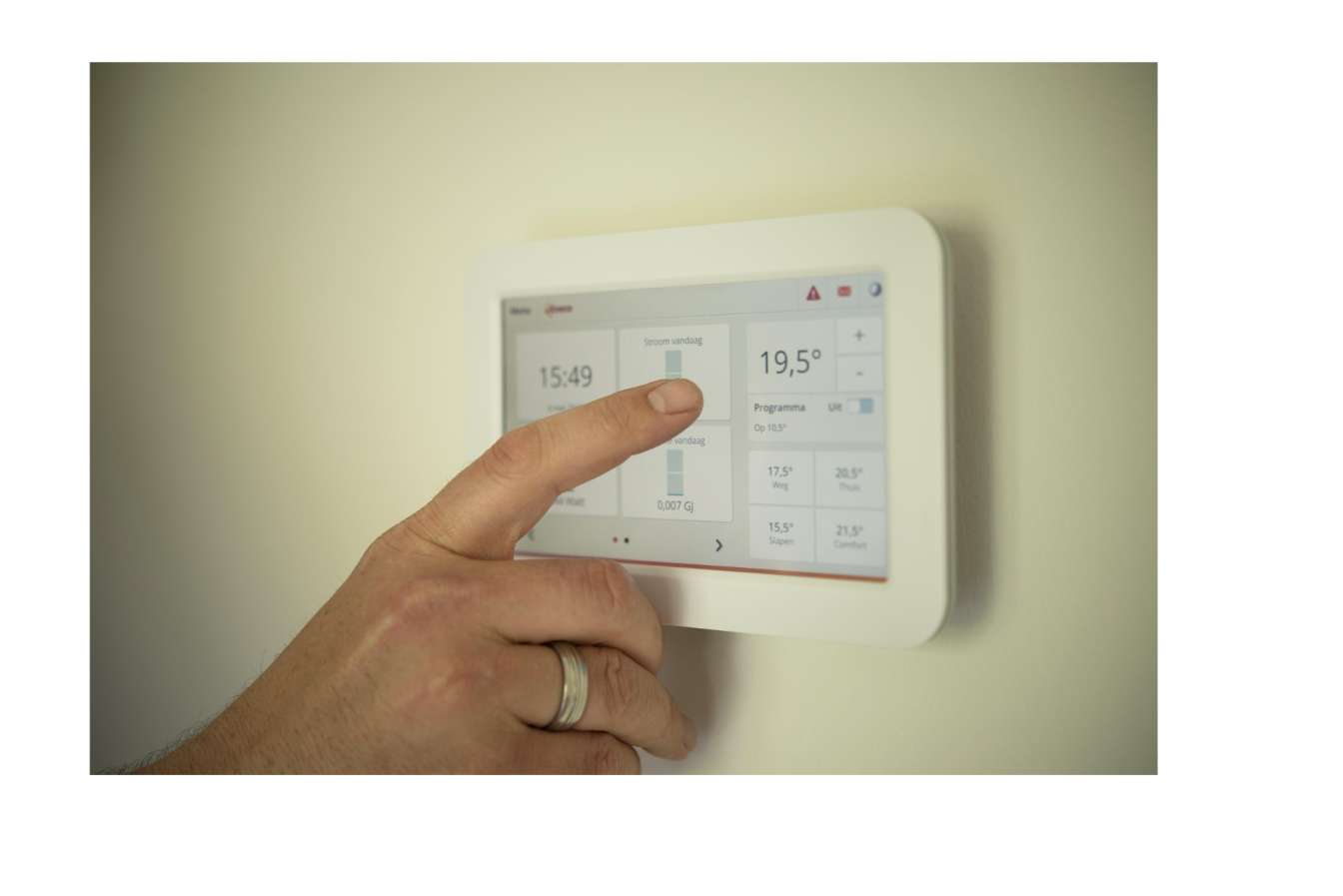
Smart thermostats bring the largest energy line item into your home heating and cooling by monitoring your routine and self-regulating instead of operating on a static timetable that doesn’t account for whether anyone is actually home.
Energy monitoring devices (whole-home or per-circuit) are designed to be mounted at the panel level and provide information that you can’t get by looking at your utility bill: which circuit, what time of day, which appliance is actually responsible.
If you’re looking for broader context on where this fits in efficiency, Standards, integration of renewables, and what “smart” really means at a grid level, our Green Technology Guide is a useful companion read before you start shopping.
My opinion after a week of actually measuring rather than speculating
On its own, scheduling isn’t where the savings are coming from. I thought it would be; I was dead wrong.
I found that monitoring data was more effective at changing my behavior than automation. Once I saw (via one of the graphs) that my desk setup was consuming a significant amount of power while idle overnight, I began shutting it off manually (no automation rule required). Monitoring by itself doesn’t save energy, but it makes the unseen visible, and what you can observe influences change. That fact gets glossed over in most product pages because “set it and forget it” sells a lot better than “actually observe your data.”
The second thing I didn’t expect: not every appliance is suitable for automation. Appliances that need to be restarted manually one or two microwaves, one or two washing machines don’t tolerate having the power cut halfway through a cycle or the clock set; this is doubly annoying, and not worth any convenience the appliance might gain. I discovered this the hard way when one of my microwaves kept blanking its display when the plug schedule was activated.
The sources of the real savings (with concrete figures)
Be specific rather than vague, because “save energy” without figures is an advertisement.
One device consuming 5W in standby mode, plugged in all the time, would cost about $6.50 annually at average tariffs. That’s peanuts until you realize how many such devices you have at home: chargers, game consoles, modems, printers, coffee machines. Double that by ten to fifteen, and you reach 75 to 150$ of annual waste, not mentioning your bigger appliances.
And if we scale to commercial or office buildings, the figures are even more compelling. Smart plug load controls integrated with building management systems in certain commercial buildings have achieved up to an 86% reduction in energy consumption for devices such as printers 86% a level of reduction not achievable if relying solely on self-discipline, since who remembers to turn off the office printer every evening?
This is smart where it makes a difference, rather than simply being a “remote control with hidden controls,” for example, by controlling high-consumption appliances based on load. However, turning off heat pumps or air conditioners when not needed can deliver demand-response opportunities of up to 20%, even more important if you are on a time-of-use electricity tariff, where shifting load to off-peak periods cuts your cost per kWh, not just your total consumption.
What is many people misunderstanding about monitoring energy:
An unspoken myth is that smart plug monitors are standard lab-quality meters. They are not, and unless you are aiming to do high-quality metrology with one of these devices, you will be disappointed.
So independent tests on consumers’ smart plugs reveal wide variance in accuracy among brands: one had less than 1.7% measurement error, while four had errors from 54% to 100%, depending on load. That’s not just a rounding problem; that’s the difference between“reliable data” and“another piece of decoration in your app.“If you do care about precision, maybe trying to settle a utility bill dispute, you can’t fully trust a $ 15 smart plug
For everyday knowledge on how to identify the biggest culprit and get a rough picture of where your electricity is being used, that level of precision is good enough. You’re not doing experiments. You want to arrest the charge.
Regarding the connection to larger energy decisions:
Smart plugs and monitoring devices are a low-effort entry point. Still, they are part of a larger movement in home power management that is integrating more and more with other aspects of power- EV charge schedules, solar timing, optimizing time-of-use rates. Smart plugs can optimize device timing to use better solar generation, which becomes more relevant every year as solar adoption in homes increases.
Already considering an EV? Or what will it be like to have one? As you develop good energy management habits tracking, scheduling, gaining awareness of your actual usage all that knowledge applies. Our Electric Vehicles for Beginners section covers how time-of-use requirements intersect with these same questions, since this is often the only new load a household adds.
The certification question: does “Energy Star” mean anything at all here
Short answer: yes, sometimes. It’s useful to know the inclusion/exclusion so you don’t buy the wrong thing based on a logo.
Energy Star won’t certify individual smart plugs or power strips as individual products – that label is only applied to full-blown SHEMS systems with a certified thermostat, lighting, and plug control included. Seeing “Energy Star approved” on a simple smart plug alone is misleading, so pay attention to that claim. When it is part of a full system, the certification means that a standby power cap has been verified, and that documented energy savings are generally reported to the EPA semi-annually – a real accountability piece most one-off gadgets lack.
Quick gut-check: who really gains from these devices? Sincere recommendation
| Renting, multiple older electronics | Yes | Standby waste tends to be highest on older gear |
| Already have a smart thermostat + efficient appliances | Maybe | Diminishing returns, but monitoring still useful |
| WFH setup with desk, monitor, peripherals | Yes | Easy to schedule, easy to see immediate savings |
| On a time-of-use electricity plan | Strongly yes | Shifting usage timing directly cuts cost |
| Need lab-grade measurement accuracy | No | Use a dedicated submeter instead |
If you’re getting into it, buy one or two of the energy-monitoring smart plugs first, before jumping into a whole ecosystem. Don’t immediately add all of your biggest suspects (your game system, your desktop setup, anything “off” but still warm to the touch). Collect data on it for a week before automating. Monitoring informs you; automating is just delivering what you’ve learned.
Avoid the lure of going for every brand ecosystem and buying 10 plugs on the first day. Begin with minimal; it’s easier to start using the data check, then gradually widen as you know which kit in your specific house truly is the troublemaker, as it seldom is the one you might expect.
FAQs
Do smart plugs use electricity even when the connected device is off?
Yes, but a very small amount. Most smart plugs need between 1 and 5 watts of standby power to keep the Wi-Fi on and be ready to respond to commands, far less than the appliance they would otherwise be siphoning power from. Hubitat
Can I use a smart plug on high-wattage appliances like a space heater or AC unit?
Depends. Simply put, a non-power-metering (generic/standard) smart plug shouldn’t be used on large appliances such as a dryer or air con unit, unless it’s rated for one – because overloading a smart plug may not be inefficient; it could be dangerous.
Do I need Wi-Fi for smart plugs to work?
The best smart plug with Wi-Fi doesn’t require a hub, but it does need a Wi-Fi connection to allow remote access through the app. A few premium models also offer Zigbee or Z-Wave for a mesh-network connection without needing a home router.
Will energy monitoring alone lower my bill?
No. Monitoring alone doesn’t lower consumption; it identifies unproductive use, which, once pointed out, can lead to habit changes such as turning off appliances when they’re not needed or using power-management schemes.
Are smart plugs compatible with solar setups?
Yes. You can use them to time appliance use with solar generation, using power you already have rather than drawing from the grid.
How much can a typical household actually save?
Research has shown that targeted scheduling and interference-load elimination with good use of smart plugs can reduce household electricity consumption by 20 30% or more. Still, those figures depend heavily on the number of appliances controlled and the degree of automation.
Is an Energy Star label on a single smart plug legitimate?
No, each smart plug and power strip cannot be Energy Star certified on its own; only a technology package that includes a certified thermostat and lighting controls can follow the SHEMS standard.
Do smart power strips work differently from smart plugs?
They use the same idea but spread it across several outlets. Some let you control each outlet separately. Others combine the outlets into sets of two or four (e.g., for entertainment centers or office desks with many partially used devices).
Can these devices help with time-of-use electricity plans?
Yes, and this is where the savings become more significant. If you can run high-wattage devices when your bill has a lower rate, you’ll see the result on your bill.
What’s the biggest mistake people make with smart energy devices?
It’s neglecting to look at the monitoring data. Automation can only be beneficial if it is an informed decision; it isn’t if it’s guessed at randomly.

I’m a technology writer passionate about AI and digital marketing. I create engaging and useful content that bridges the gap between complex technology concepts and digital technologies. My writing makes the process easy and engaging. I encourage participation I continue to research innovation and technology. Let’s connect and talk technology!