Last updated on September 13th, 2026 at 04:29 pm
I’ve had three separate smart thermostats in two different homes over the past two years, and here’s what no one tells you up front: the hardware isn’t really doing much. The value is in how you configure it. That‘s the difference between the 13-15% energy savings most field tests claim and the “well, my bill didn’t change” experience many users report.
Energy-saving smart thermostats work by combining scheduling, occupancy detection, and tiny nudges to slightly cut back the hours your HVAC runs at full power. In experiments on thermostats like the Nest, average gas savings for heating and electricity savings for cooling are roughly 13% and 14%, respectively, but the variation within specific homes can be large. Some homes see practically zero savings. Others get greater than 20%. The device can only do so much; your home’s character, your behavior, and how well you program the device are equally (or more) important.
This guide will take you through how these thermostats work, where the real savings are, what sensors and scheduling actually do, what the installation is like, and how to buy one without paying for features you won’t use.

Table of Contents
The basics: what’s actually inside these things
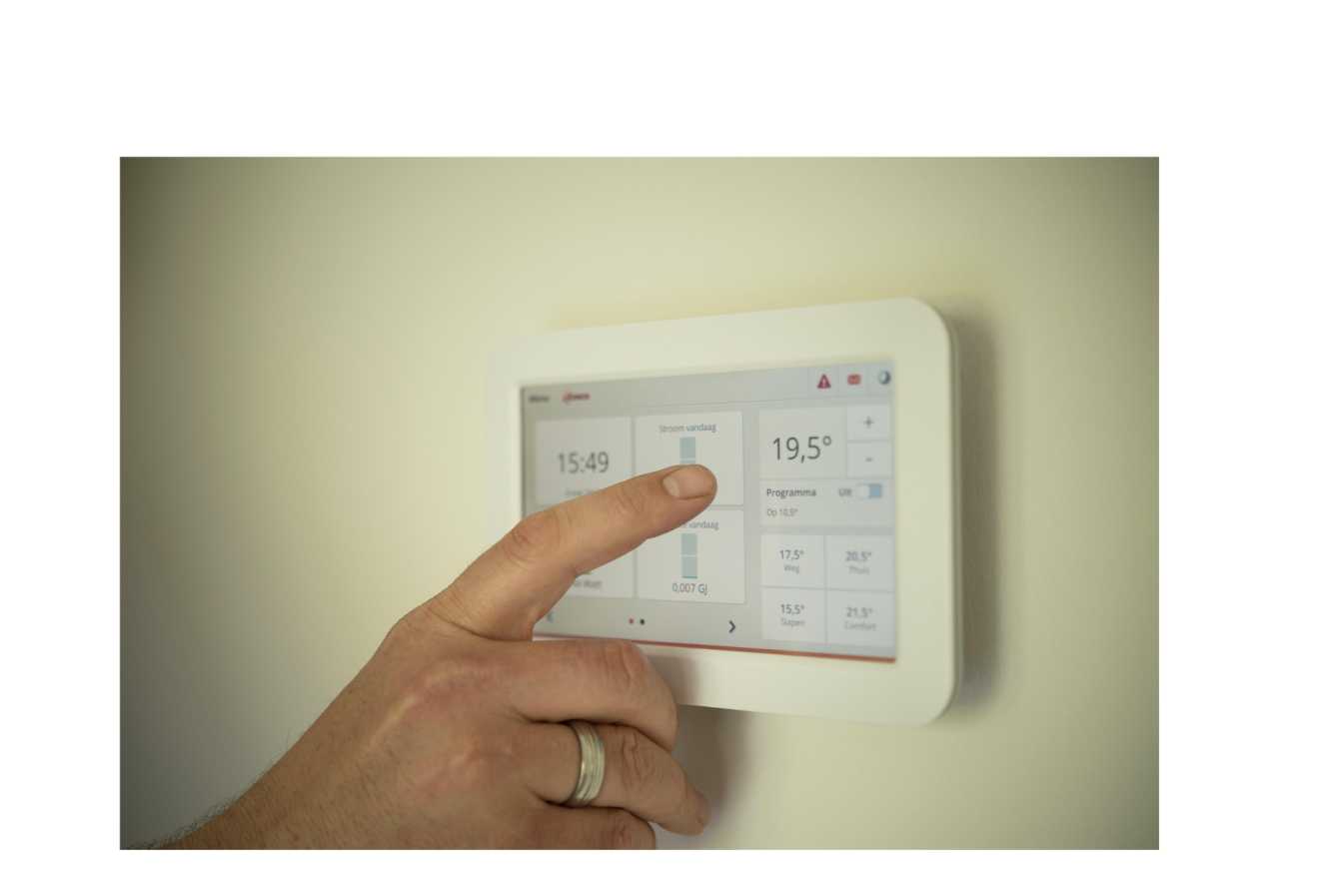
So imagine that instead of a traditional wall-mounted dial or simple programmable thermostat, your thermostat connects to Wi-Fi. That is the key to everything else: remote control via app, alerts, energy reports, and even compatibility with Alexa and Google Home.
Underneath, most models run on a mix of:
- A learning algorithm examines your manual adjustments and eventually begins to anticipate your schedule.
- Sensors (motion sensors, even geofencing through your phone) that detect when no one is home.
- A small processor that communicates with your HVAC equipment and records run time data.
- An app that converts all this data into easy-to-read reports – how many hours your AC was on, estimated savings, etc.
If you’re already building a smart home, there’s one more piece of the puzzle. Connecting your thermostat to a reliable hub will help your home work together more easily, and our Best Smart Home Hubs round-up identifies which hubs are compatible with Ecobee, Nest, and Honeywell thermostats.
How a smart thermostat decides when to turn the AC on
This section will make people second-guess smart thermostats. Instead of a “smart” thermostat making brilliant decisions as it goes, most of the “smart” behavior comes from a small pile of rules that trigger a cascade.
First, it operates on a schedule, either one you created or one it deduced from monitoring your manual temperature adjustments over a week or two. Second, it looks at occupancy signals motion sensors, geo-fencing, or both to determine whether to maintain the schedule or turn back the temperature when the house is empty. Third, in premium models, it considers local weather and time-of-use electricity rates to turn on the heat or AC before rates skyrocket.
The ecobee demand-response pilots showed that we are not perfect but reasonably cooperative; assuming small, temporary comfort (a couple of degrees) and a mildly attractive payback, and not being surprised by it…we will accept those. And the trend, or the future of the technology, appears to be toward: less time-based fixed schedules and more of a civilization of constant trade-offs.
Where the energy savings really come from (and where they don’t)
Here’s where I want to dissent about some of the marketing. The 10-15% average savings figure is used all the time, but that’s an average across extremely wide swings. Researchers looking at real-world implementations found some homes experienced no savings at all, especially those that already had a well-run programmable thermostat installed.
Three things determine whether you land on the high end or the low end of that range:
- Your existing routines. If you’re regular about turning the temperature down as you step out of the house, a smart thermostat won’t help.
- Your building. Weak insulation, drafty windows, or a system that isn’t zoned properly limits the potential of any thermostat. Multi-family dwellings and heavily compartmentalized housing won’t respond as well to one central thermostat.
- Which features do you actually use? Action studies of residential thermostat programming consistently show the same things: no one programs presets, someone overrides the incentives to save energy, or the user ignores the programmer after the initial installation. All of that removes the potential savings.
One more for homeowners: when a customer’s bill drops, they begin uncapping their comfort setpoints and feel like they’ve “earned” the slack. This is a real, documented phenomenon in program evaluations.
Scheduling is where most people leave savings on the table.
Most smart thermostats come with a default schedule that is generated automatically by observing what you do for one or two weeks. That’s fine, but it also means the installed schedule is based on how you used to do things.
This taught me a lot. I ran learning mode on autopilot for a whole month on one unit, and it set a setback schedule for a week when I was traveling and working weird hours, which isn’t my usual pattern. I saw the problem just from the monthly energy report I pulled.
It’s a quick fix, but people often avoid it: a couple of weeks later, return to the schedule and do an actual audit to compare what it says to what is really going on. Here are some possible changes to make:
- Widen the setback zone when you’re asleep. The vast majority (of people in general) are quite conservative with this out of habit.
- Establish a reliable “away” trigger that is based on geofencing instead of motion sensors that animals or fans can trigger.
- If you work hours that are not regular, turn off aggressive learning mode and set a manual schedule:
Sensors: the quiet upgrade that matters more than the app
The hardware on these sensors seems more important than any software feature; simple motion detection, for example, lets the thermostat know whether somebody is home. It doesn’t, for instance, tell you that the living room is too hot when the bedroom is too cold.
Wireless sensors (small pucks you stick throughout the house) are also available. They let the thermostat average or prioritize multiple rooms rather than just the single wall it sits on. If your house has a consistently warm or cold room, this is the most effective single upgrade you can make.
Modern research-grade deployments are taking this concept even further. They are starting to leverage motion data from the space, along with prior occupancy trends and other sensor modalities, to foresee, instead of react to, when a space can be preemptively set back without anyone noticing. That’s largely still in a pilot/research phase; over time, that’s the eventual course of the hardware.
Installation: what I ran into setting mine up
If your HVAC is compatible, it takes 20–30 minutes to install, and if you are buying a new thermostat, most have a compatibility checker in an app before you purchase. The difficult part is the C-wire, the common wire that also supplies constant power to the thermostats.
Older houses can also require an adapter kit or an electrician if you don’t already have a C-wire run. I experienced this exactly on an older HVAC unit (the app indicated it was compatible, but I opened the wallplate and found no C-wire, so I had to order an add-on power extender kit that wasn’t included with the base system). It’s not a dealbreaker in most cases, but plan for an additional $15-25 and a little bit of patience if your house is over 15 years old.
Beyond wiring, a few things affect installation:
- In some cases, with multi-stage heating and cooling, you may need special models, since not all smart thermostats support two-stage heat pumps.
- For a zoned system with multiple thermostats, make sure the smart thermostat can communicate with your current zone panel.
- Smart home compatibility: always check that your chosen smart thermostats are compatible with your smart home before you buy, not afterward. Our guide to smart home technology explains whether or not your preferred thermostats will work with popular smart home platforms like Matter, Google Home, and Apple HomeKit.
Buying guide for smart thermostats for energy saving
There’s not one “best” smart thermostat. A lot depends on your central air/heat, where you live, and whether you’re willing to put in extra effort… Still, a few things should matter more than pretty programs or complicated apps:
First: Compatibility. Before anything else, double-check your HVAC system type to see whether it is compatible with the manufacturer’s compatibility tool. This cuts the guesswork in half.
Remote sensors matter less than AI marketing makes them seem. A thermostat with inexpensive remote sensor accessories will probably provide more tangible comfort gains than one that touts “AI-enabled” scheduling without sensors.
Notice how much detail the app includes in its reports. Some offer detailed reports on how you have been spending your time and comparative data; others give you a fuzzy summary like “You’re doing great!” Such detailed reports are useful for auditing and improving your schedule long term.
Verify demand-response program eligibility. In many cases, a utility may provide you with a free or discounted thermostat if you sign up for a demand-response program. Before shelling out your hard-earned cash, check your utility’s website; rebates can sometimes pay for a significant portion of the up-front cost.
Remember your entire security and automation system, not just the thermostat. If the goal is a more integrated home, reviewing the role of thermostats in relation to other interconnected devices might be advisable (see our Home Security Cameras Guide for common concerns that also overlap here, such as network bandwidth and hub integration):
And if you’re wanting harder figures before purchase, the Northwest Energy Efficiency Alliance did one of the most comprehensive independent field studies on smart thermostat behavior in actual homes–regional variations in weather, user behavior, and program design lessons–which is really quite valuable if you’re interested in seeing your savings more detailed according to climate zones, not just as a blended average.
FAQs about smart thermostats for energy saving
Do smart thermostats save energy at all?
No. While average field study results indicate actual savings will occur, appliances not equipped with a good functioning programmable thermostat, or environments where actual operation frequently deviates from the control settings, may have limited savings.
What realistic savings can I expect?
According to field trials, most systems lower cooling and heating energy use by an average of 10-15%, but savings vary widely depending on climate, building efficiency, and how often you use “auto” features.
Are smart thermostats good for mild climates?
While the percentage savings look the same, the dollar amount will be lower because you’re actually using less heating or cooling. Payback time is longer when you have less experience. That’s when the rebates mean more in those regions.
What are the privacy implications?
Smart thermostats record sophisticated occupancy and temperature information, sometimes linked to pinpoint location data. Check the manufacturer’s data-sharing policy to see whether it sends that data to utilities, aggregators, or advertisers.
What do I need to do if my internet crashes?
Most units revert to the last known schedule, and still permit manual adjustment directly on the device. App control and demand-response enrollment are suspended until communication is re-established.
Can tenants operate smart thermostats?
It requires landlord approval and direct control over your HVAC. If replacing the thermostat is not an option, plug-in smart controls for mini-splits or space heaters will do the trick.
SmartThermostats.Safe?
As with all networked devices, this product’s security depends on the authentication and update practices the vendor uses. Use a unique password, enable multi-factor authentication if the feature is provided, and never reuse passwords from other sites.
Professional Installation.
Most homes with a regular HVAC system can do it themselves in under half an hour. Homes without a C-wire, or those with multi-stage or zoned systems, might require an adapter or a short electrician visit.
My take after using one for months
If you’re diligent about checking your schedule every couple of weeks and pair that with a few simple upgrades (seal those drafts, fill those gaps, etc.), an energy-saving thermostat is really worth it. I’ve seen a real difference on my bills (especially in shoulder season, where the setback scheduling does most of the work quietly in the background).
If you fall into this latter camp- you set it and forget it- you’re better off saving the cash and sticking with a simple programmable thermostat. It’s not rocket science: The technology helps you out a little with a little upkeep, and that’s (almost) never mentioned in reviews.

I’m a technology writer passionate about AI and digital marketing. I create engaging and useful content that bridges the gap between complex technology concepts and digital technologies. My writing makes the process easy and engaging. I encourage participation I continue to research innovation and technology. Let’s connect and talk technology!