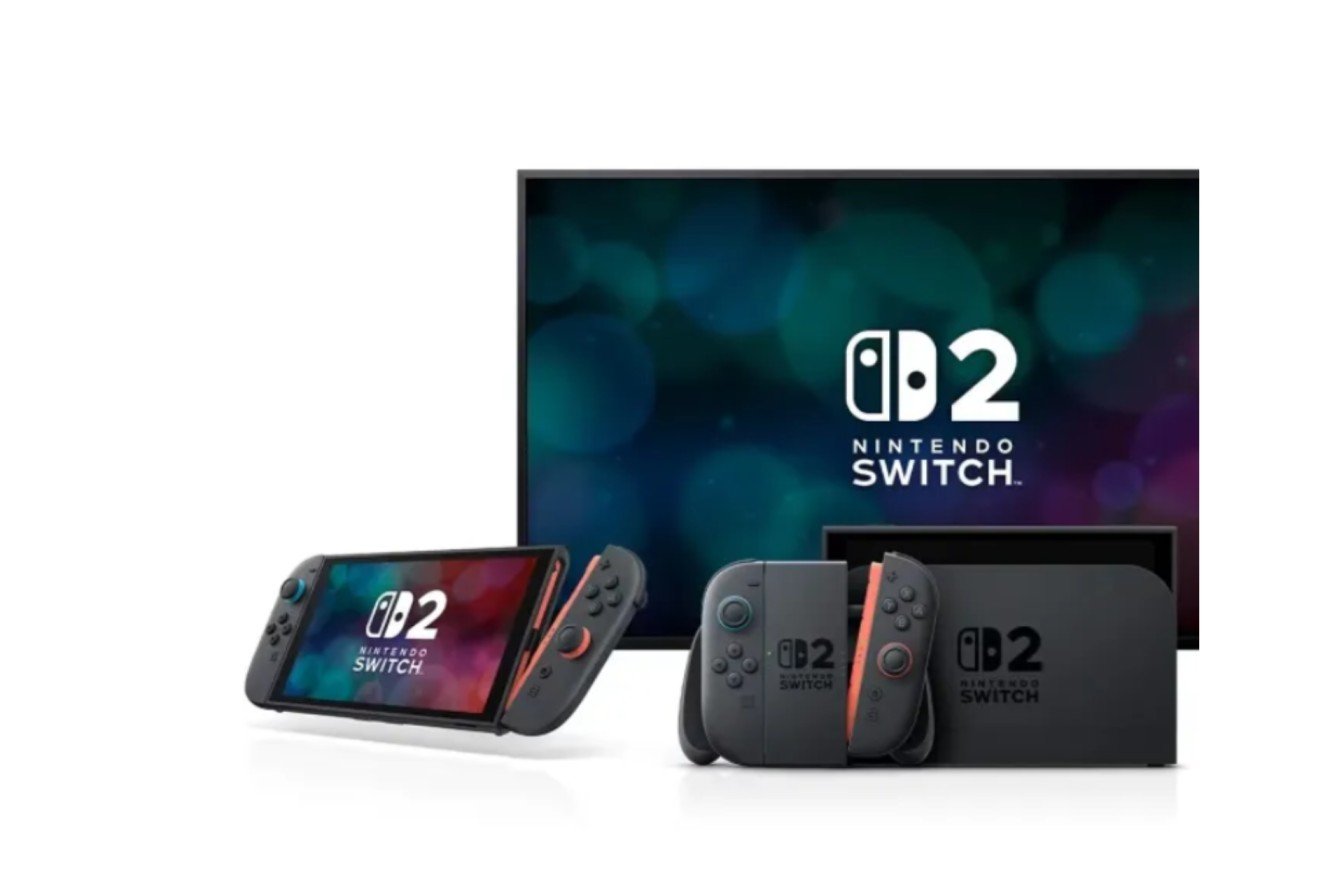
Nintendo Switch 2 Specs: Display: 7.9” 1080p (120 Hz max); Custom CPU; NVIDIA GPU; Resolution: Up to 4K supported by dock (60fps); Storage: 256GB internal. Nintendo generally releases most of its hardware specs. Still, it doesn’t specify RAM or GPU architecture, so we sourced those details separately from other news outlets and labeled them accordingly. This guide is for shoppers and upgraders who want the specs, not the noise. For the big picture, see our Nintendo Switch 2: Complete Guide.
Table of Contents
Nintendo Switch 2 Specs at a Glance
| Processor | Custom NVIDIA processor | Official (details not published) |
| GPU / RAM | Ampere-based GPU, 12 GB LPDDR5X | Digital Foundry analysis |
| Internal storage | 256 GB UFS | Official |
| Expansion | microSD Express, up to 2 TB | Official |
| Display | 7.9-inch LCD, 1920 × 1080, HDR10, VRR up to 120 Hz | Official |
| TV output | Up to 4K at 60 fps, or up to 120 fps at 1080p/1440p | Official |
| Battery | 5,220 mAh, about 2–6.5 hours | Official |
| Wireless | Wi-Fi 6, Bluetooth | Official |
| Ports | 2 × USB-C, game card slot, 3.5 mm audio jack | Official / retailer listings |
All the below amplifies these rows.
CPU and GPU
Nintendo’s consumer spec page only lists the maker: a custom Nvidia chip. Independent analysis reveals the specifics. Digital Foundry says the GPU is Nvidia’s Ampere… and its numbers show a GPU that runs at a slower clock speed in handheld and a faster one docked (561 MHz in handheld, 1007 MHz docked), which helps explain the difference in docked play quality.
Consider the clock speeds as a measurement, not a statement from Nintendo. Much like DLSS-inspired upscaling, ray tracing could be in the platform’s toolkit, but it doesn’t necessarily mean the game you’re playing uses it.
RAM
The common write-up is 12 GB of LPDDR5X (again, from Digital Foundry, not Nintendo’s spec sheet). Two disclaimers matter more than the number: The RAM and bandwidth are split across system duties, so games don’t get the whole lot. And developers still make per-game trade-offs. More RAM raises the ceiling but doesn’t guarantee every game reaches it.
Internal Storage
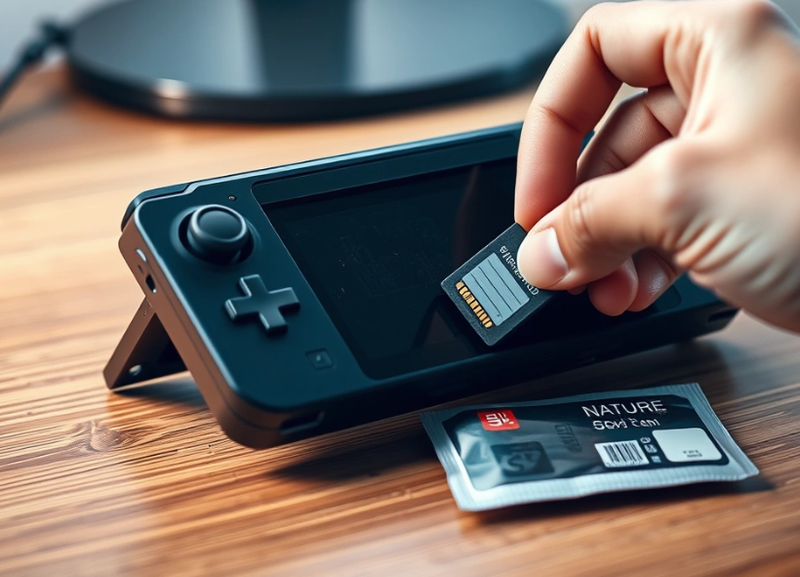
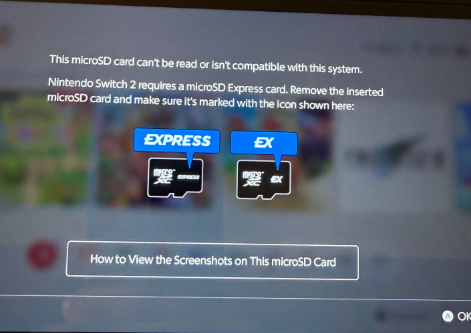
It has 256 GB of UFS storage. The system reserves part of that, so the available total on the box isn’t actually quite as high as that headline figure. You can expand it with a microSD Express card (up to 2 TB).
The problem is compatibility. If it’s not a microSD Express, you’re limited to copying screenshots and videos. If you have an old card from a prior Switch model, it won’t work here for game storage, so budget for a new card if you choose digital.
Display
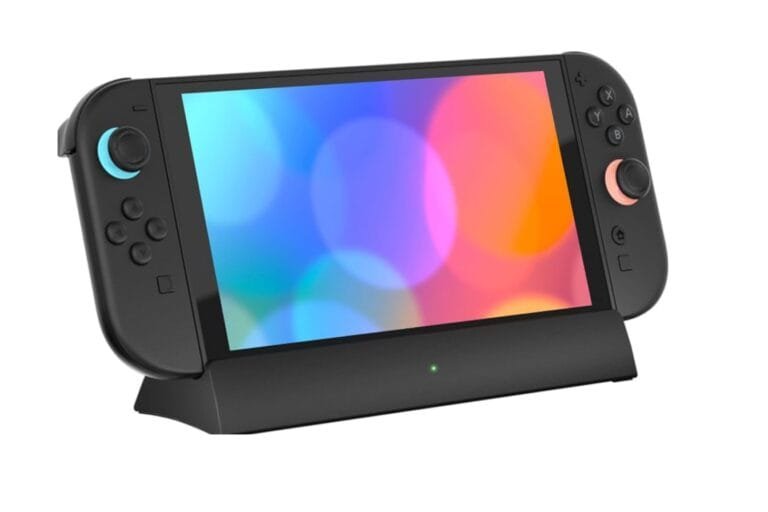
The screen is a 7.9-inch capacitive LCD. That’s a significant upgrade on the original Switch’s 6.2-inch panel, and larger than the 7-inch OLED counterpart. The OLED, of course, means it uses that panel type, but don’t expect the Switch 2 to deliver the same strong black levels as the older Switch OLED.
Resolution
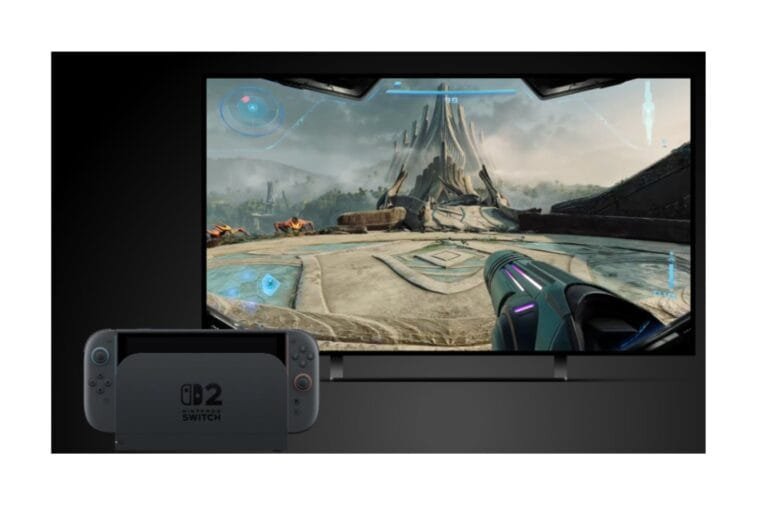
Handheld resolution maxes at 1920 × 1080. In TV mode, Nintendo says the console can output up to 3840 × 2160 (4K). The confusion comes from the fact that 4K is simply the maximum output, not a given. Games can run at a lower resolution and be upscaled to your TV, so always look at individual game performance notes.
Refresh Rate
The display you get in the box can go up to 120Hz. On TV: Nintendo says 120 fps at 1080p or 1440p is possible, and 60 fps at 4K. That leaves you to choose between clarity and smoothness; you can’t hit the maximum frame rate and resolution simultaneously on the Switch’s TV mode, and whether a title hits 120 fps depends on the publisher.
HDR
The display is listed as HDR10. This is the standard common baseline HDR format, so look for it in a game’s options rather than assuming it’s there by default. On a TV, HDR depends on what your TV and the game support. We also cover HDR and handheld battery life in our Switch 2 battery life guide.
VRR
Variable refresh rate (VRR) lets the screen sync with the game’s frame rate, reducing tearing and stuttering. The Switch display supports VRR for up to 120Hz. (Nintendo implemented VRR in TV mode via a software update at a later date. On 10 September 2026, Nintendo released update 23.0.0 for the Switch, which introduced VRR output in TV mode. Three conditions are necessary: the dock needs an update, the game must support it, and the TV must as well. All three need to line up for VRR to work in TV mode.
Battery
The Switch console’s battery has a 5,220 mAh capacity and a Nintendo estimate of 2 to 6.5 hours of life, depending on the game. The battery is a built-in type, not removable by the user. It takes about 3 hours to charge the battery in sleep mode. That is a wide range, so it deserves its own explanation, which is why we cover it in the Switch 2 battery life article.
Dimensions
Nintendo’s US page lists the Switch 2 as 4.5 inches tall, 10.7 inches wide, and 0.55 inches thick with the Joy-Con 2. The UK page lists 116 mm x 272 mm x 13.9 mm. The thickness at the control sticks and the ZL/ZR buttons is slightly greater (up to about 1.2 inches, according to Nintendo’s note), which to keep in mind if you’re looking for a case that accounts for the controllers being attached. We have a Switch 2 case guide for that.
Weight
The console weighs about 0.88 lb (399 g), or about 1.18 lb (535 g) with Joy-Con 2 attached. The listing has 399 g and 535 g. The regional spec pages differ by a few grams, so these are ballpark figures.
Ports
The console has two USB-C ports. The bottom one handles charging and docking, while the top one is for accessories and charging. That second port is a practical change, since you can charge while using a stand or tabletop play.
The Listing in Singapore for Nintendo lists the two ports differently: one is USB 3.2, and the other is USB 2.0 (No Video Output). They don’t say which is which, so it’s worth checking the listing again before relying on a specific port to connect a specific accessory. They also add they cannot guarantee all third-party products will work.
Other connections:
- A game card slot compatible with both Switch 2 and original Switch cards.
- A microSD Express port
- A 3.5 mm headphone socket
Wi-Fi and Bluetooth
There’s Wi-Fi 6 and Bluetooth. The console doesn’t natively support a wired internet connection. In TV mode, you use the dock’s LAN port, so you won’t get a wired connection unless the console is docked; you still need wireless for handheld mode.
Dock Specifications
The dock has two USB 2.0 ports on its side, plus an HDMI port and a LAN port. Nintendo’s UK page also lists a system connector and an AC adapter port.
iFixit’s teardown listing includes more detail than Nintendo’s, such as HDMI 2.1 and a gigabit LAN port, and lists the dock’s weight as 381g. Because Nintendo doesn’t list these on its consumer page, treat them as third-party documentation.
One practical point: USB 2.0 is the slower standard. The dock’s side ports are fine for accessories like controllers or a camera, but don’t expect fast external-drive speeds.
Joy-Con 2 Specifications
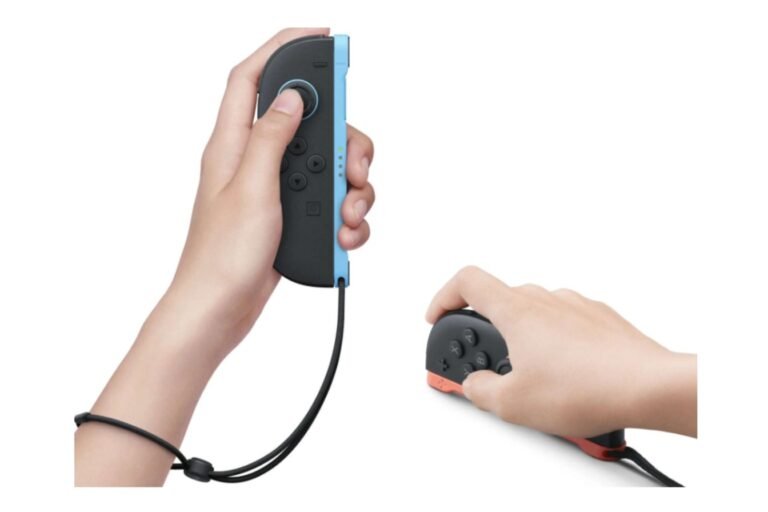
Both Joy-Cons 2 attach magnetically. Both include an accelerometer, a gyroscope, and a mouse sensor. The left weighs ≈66 g and uses Bluetooth; the right adds NFC. iFixit’s weights are roughly 65 g(left) and 68 g (right).
2 Joy-Con 2: Each has a 500 mAh cell with a 20-hour battery (3 hr 30 min charge time). They charge when you hold them in the console or use the Joy-Con 2 charging grip (sold separately). Comes with HD Rumble 2 and motion controls, but mouse-play only works in supported titles. Our Joy-Con 2 guide has a lot more info on these controllers.
Switch 2 vs Switch Specs
The original Switch specs below are from Nintendo’s 2017 console spec listing, with the battery runtime listed for the later upgraded model.
| Screen | 7.9-inch LCD | 6.2-inch LCD |
| Handheld resolution | 1080p | 720p |
| TV output (max) | 4K at 60 fps | 1080p |
| Internal storage | 256 GB UFS | 32 GB |
| Storage expansion | microSD Express, up to 2 TB | microSDHC/SDXC, up to 2 TB |
| Processor | Custom NVIDIA | Custom NVIDIA Tegra |
| Wi-Fi | Wi-Fi 6 | 802.11 a/b/g/n/ac |
| Battery | 5,220 mAh | 4,310 mAh |
| Console weight | 0.88 lb | 0.66 lb |
| Weight with controllers | 1.18 lb | 0.88 lb |
On its own, the original Switch is 0.66 lb and 4 × 9.4 × 0.55 inches (with the Joy-Con controllers). The Switch 2 is bigger and heavier in every dimension. That extra size means a larger display and more power, which translates to longer estimated handheld battery life, even with a significantly smaller battery. Sure, that may not matter if you mostly play docked, but it’s the spec worth considering if you want to play on the go.
FAQs
Can I use Switch 2 to play the old Switch Games?
The game card slot accepts original Switch cards, and Nintendo describes the system as compatible with most Switch games. Check individual titles if you have a specific one in mind.
Does it have audio options?
It has a 3.5 mm headphone jack, stereo speakers, and 5.1 PCM output over HDMI in TV mode.
Is Nintendo’s specs sheet complete?
No. It doesn’t document RAM or GPU specifications. Digital Foundry reports this information, as Nintendo tends to specialize in reporting those figures rather than providing them directly.
Can the specifications change after launch?
The hardware can’t, but features can. The most obvious is TV-mode VRR, which arrived with system update 23.0.0 on 10 September 2026.

I’m a content writer passionate about games and strategy. I’m dedicated to creating engaging, informative content for today’s audience. I keep a close eye on the latest gaming and industry trends to deliver entertaining, informative articles. Whether it’s exploring new tools or analyzing the sport, I bring a new, accessible voice to each episode. Let us connect and enhance your content with knowledge and insight!
[…] for the complete details? read our Nintendo Switch 2 Specs: The Complete Hardware Guide. If you can’t decide between generations, our Nintendo Switch vs Switch 2: What’s the […]