Last updated on September 26th, 2026 at 01:28 pm
But the truth is, I would toss around AI and Machine Learning and have them used interchangeably for the same thing. Everyone does it. You see a Netflix suggestion, and you say it is AI. You have heard about ChatGPT and think that it is pure Machine Learning. I had the same problem, and it irritated me enough that I tried to figure it out.
This is what I learned, in the simplest way possible.
Table of Contents
The Vision: AI is the Aim; ML is the technique.
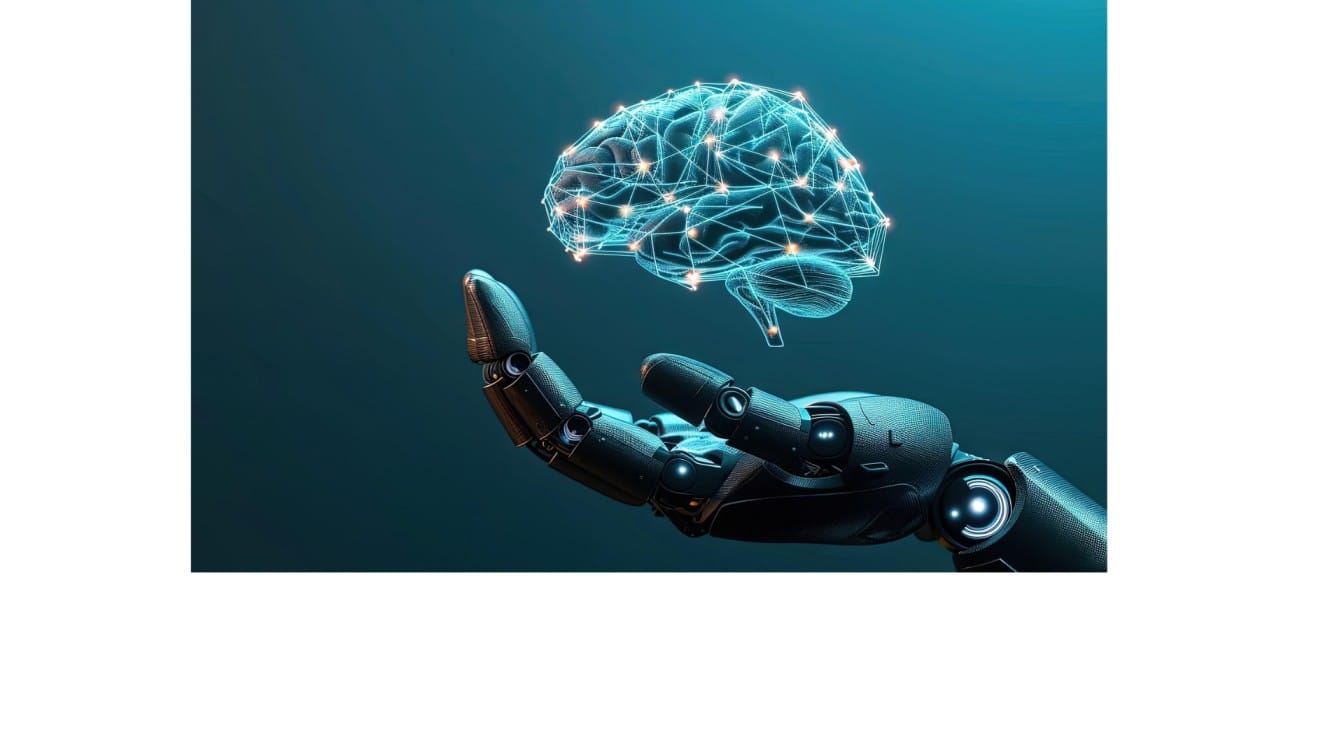
So here’s the deal. The big concept is Artificial Intelligence: creating machines that can think, reason, and solve problems like humans. It’s the dream. Robotics to drive your home, self-driving cars, and virtual assistants such as Siri. All of that falls under AI.
Machine Learning? That is one way of getting there. It is a methodology where you feed a computer a large amount of data, and it learns trends independently without you having to write every rule into a program. In that way, AI will train a robot to play chess, and ML will train it to watch 1 million games of chess until it learns how to win by itself.
I accidentally stumbled upon a straightforward analogy that made sense to me: rule-based systems (such as AI: if this occurs, do that) can be used, but ML learns explicitly through experience.
Why It Gets Confusing (And Why I Got It Wrong)
Here’s where I tripped up. All the hype goes to Machine Learning because it’s what’s working right now. Under the hood, building an AI-powered email filter or a fraud-detection provider often relies on machine learning.
However, not every AI is Machine Learning. Other AI systems operate on pre-established rules and learn nothing new. Imagine a program like an old-school chess-playing one which adheres to coded instructions – it is AI, but not learning or getting better by itself.
I initially believed that it was only word games. Then I realized the difference matters when you are trying to understand what these systems can and can’t do.
How They Actually Work Differently
AI’s Approach:
- Can reason and solve problems.
- Rules, logic, or learning (or a combination of the 3)
- Covers not only basic chatbots but also advanced robotics.
Machine Learning’s Approach:
- Needs data – lots of it
- Discovers patterns that have not been programmed.
- Improves as things are repeated.
I tried this concept with something I use daily: Spotify recommendations. Spotify also has an AI named Machine Learning that monitors what I skip, replay, and save. It learns my taste over time. However, it is the whole system, including playlist management, UI choice, or voice recognition, that is gained by the wider AI in conjunction with the ML.
Practical Cases and situations that worked out in my favor.
I borrowed some equipment so that I could compare the difference in action:
Pure Machine Learning:
- Spam filters that teach the algorithm what you consider junk mail.
- Amazon product discovery based on your shopping behavior.
- Automatic typing on your cell phone keyboard.
AI (That Might Not Use ML):
- Decision tree-based customer service bots.
- GPS navigation computing the fastest path through algorithms.
- Scripted behavior game AI in older video games.
AI + Machine Learning Combined:
Self-driving vehicles (AI makes navigation decisions; ML identifies pedestrians and road signs).
AI (a robot vacuum handles chores, speech recognition upgraded by ML)
The surprising fact: using basic rule-based AI, Google Cloud says you can achieve AI functionality without large datasets, whereas machine learning definitely requires training on large volumes of data.
The Typologies Which Do Matter.
After covering the foundations, I needed to understand the types. As it happens, AI has classifications such as Narrow AI (tasks such as facial recognition), and the sci-fi one such as General AI (intelligence on a human level and everywhere – we have not yet even remotely reached it).
Machine Learning is divided into three major categories:
- Supervised Learning: You give it examples, with the answers (as finished pictures: this is a cat, this is a dog).
- Unsupervised Learning – It self-discovers patterns within unlabeled information (and classifies customers according to behavior)
- Reinforcement Learning: A learning approach that works through trial and error, with rewards given for good actions (how robots learn to walk).
Appreciatively, the fact that Coursera mentions that in the real world today, the majority of applications are based on supervised learning is interesting, as that is the most trusted approach when you have quality data.
What This Means to You (Why I Care Now).
Knowing the difference is more than academic. When a person declares they are delivering something powered by AI, now you may ask: Does it learn and improve, or does it try to apply clever rules?
If you want to learn this stuff (I am considering it), start with the basics of machine learning. Programs such as Elements of AI offer free classes that don’t require you to be a programmer. I borrowed it out – it is freakishly available.
It’s also wise to know this when reading AI regulation or ethics news. Machine Learning systems can assimilate bias from their training data (I never assumed this before). This is an ML-specific problem, unlike one that similarly impacts rule-based AI systems.
My Main Takeaway
After digesting all this, I’m trying to build a basic conceptual model of AI. The way you are trying to build it is called Machine Learning, at least one powerful method to do so.
This does not require a scholar. I wasn’t. However, now that I encounter so-called smart functionality in an app, I can’t tell whether it trains on my actions or runs a well-written set of logic.
And honestly? That’s pretty cool to know.
You are not alone if you are still trying to wrap your head around it. Trust me, once it clicks, you’ll start noticing the difference everywhere; you will wish the technology you use daily were different, and you will start thinking about it.
Read:
What is the Difference Between Deep Learning and Machine Learning

I’m a technology writer passionate about AI and digital marketing. I create engaging and useful content that bridges the gap between complex technology concepts and digital technologies. My writing makes the process easy and engaging. I encourage participation I continue to research innovation and technology. Let’s connect and talk technology!